ADVICE CENTRE -
HISTORY OF INSURANCE
Insurance is just a form of risk management, where losses are shared equally amongst all those who contribute. The insurance companies make their money by adding a fee for providing this service, as well as by investing the funds they have on standby for payouts. There is no reason, why you and a group of friends could not do exactly the same thing.
Gambling transactions are based on the same principle and calculations are constantly done to make sure that the bets (premiums) are always more than the winning (claims).
 Early methods of transferring or
distributing risk were practiced by Chinese traders as early as the 3rd
millennia BC. These merchants travelling treacherous river rapids would
cleverly distribute their wares across many vessels to spread the loss
due to any single vessel's capsizing.
Early methods of transferring or
distributing risk were practiced by Chinese traders as early as the 3rd
millennia BC. These merchants travelling treacherous river rapids would
cleverly distribute their wares across many vessels to spread the loss
due to any single vessel's capsizing.
Modern profit insurance manifested in Babylon almost 2000 years B.C., in a contract of loan of trading capital to travelling merchants. The contract contained a clause that the risk of loss due to robbery in transit was borne by the party providing the loan. In consideration for bearing this risk, the lender calculated interest on the loan at an exceptionally high rate.
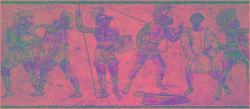
The Greeks and Romans introduced the origins of health and life insurance to us around 600 AD, when they organized guilds / benevolent societies (such as sodalitates, collegia and military societies) which afforded members certain benefits, such as proper burial rites, or a financial contribution towards burial costs (funeraticium) or travelling expenses of members of the army. In exchange for this benefit, members of the society made regular contributions to it.
 During this time, Achaemenian
(Iranian) monarchs were the first to 'insure' their people to some
extent, formalising the process by registration thereof at court. In
accordance with tradition, during Norouz - the beginning of the Iranian
New Year - the heads of different ethnic groups presented gifts to the
monarch. The purpose of these gifts was to ensure (insure) that whenever
the gift-giver was in trouble, the monarch (and the court) would help
him. In return, whenever the giver was in trouble or needed finance, the
court would check the gift's registration, and could even - if the
amount exceeded 10,000 Derrik - double that in return.
During this time, Achaemenian
(Iranian) monarchs were the first to 'insure' their people to some
extent, formalising the process by registration thereof at court. In
accordance with tradition, during Norouz - the beginning of the Iranian
New Year - the heads of different ethnic groups presented gifts to the
monarch. The purpose of these gifts was to ensure (insure) that whenever
the gift-giver was in trouble, the monarch (and the court) would help
him. In return, whenever the giver was in trouble or needed finance, the
court would check the gift's registration, and could even - if the
amount exceeded 10,000 Derrik - double that in return.
All these instances gave effect to the concept of mutual assistance in case of loss, but the actual concept of mutual assistance came to the fore in guilds and similar associations and societies which existed in Europe and England during the middle-ages.
These associations afforded members (or their dependants) assistance in case of loss caused by perils such as fire, shipwreck, theft, sickness or death. Originally, the extent of the assistance was determined by the actual need of the member who suffered the loss, eventually, however, he would be assisted to the extent of his actual loss. In many of these guilds individual members, and not merely the guild itself, were under a legal duty to assist those members who suffered a loss. Once provision was made for the latter to have a corresponding legal right to claim such assistance, the development towards proper mutual insurance was completed.
Separate insurance contracts (i.e. insurance policies not bundled with loans or other kinds of contracts) were invented in Genoa in the 14th century, as were insurance pools backed by pledges of landed estates. These new insurance contracts allowed insurance to be separated from investment, a separation of roles that first proved useful in marine insurance. Insurance became far more sophisticated in post-Renaissance Europe, and specialized varieties developed.
On 3 December 1591, one hundred Hamburg house-owners concluded the so-called “Hamburg fire contracts”, which are generally regarded as some of the first examples of true mutual insurance contracts that we have today.
Toward the end of the seventeenth century, London's growing importance as a center for trade increased demand for marine insurance. In the late 1680s, Mr. Edward Lloyd opened a coffee house that became a popular haunt of ship owners, merchants, and ships’ captains, and thereby a reliable source of the latest shipping news. It became the meeting place for parties wishing to insure cargoes and ships, and those willing to underwrite such ventures. Today, Lloyd's of London remains the leading market (note that it is not an insurance company!) for marine and other specialist types of insurance, but it works rather differently than the more familiar kinds of insurance.
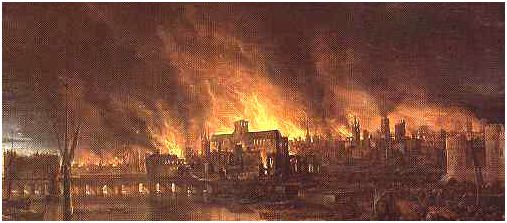
Insurance - as we know it today - can be traced to the Great Fire of London of 1666 that ravaged London from Sunday, 2 to Wednesday, 5 September.
The fire is reported to have started in Pudding Lane in the king's appointed baker's shop (Thomas Farriner). His maid failed to put out the ovens at the end of the night, and ignited the wooden home of Farriner. The maid failed to escape the fire, and was one of its few victims. Once it started, however, the fire spread quickly. The city was basically made out of wood, and during September very dry. Strong winds fanned the flames.
The fire gutted the medieval City of London inside the old Roman City Wall. It consumed 13,200 houses, 87 parish churches, St. Paul’s Cathedral, and most of the buildings of the City authorities. It is estimated that it destroyed the homes of 70,000 of the City’s 80,000 inhabitants. The death toll from the fire is unknown and has traditionally been thought to have been small, as only a few verified deaths are recorded.
The Great Fire cost London an estimated £10million, at a time when its annual income was just £12,000. Not surprisingly, this expense focused minds on the idea of insuring against fire.
By the end of the 17th century, three London societies were actively engaged in the business – Nicholas Barbon's "Fire Office" (later known as the "Phoenix Fire Office") was established in 1680, the "Friendly Society" established in 1683, and the "Hand-in-Hand" Office. (The Hand-in-Hand was originally formed in 1696 in Tom's Coffee House as the 'Amicable Contributionship for the Insurance of Houses against Fire', but the name was changed after the company adopted an emblem of two hands joined beneath a crown. It still exists as part of the CGNU insurance conglomerate, but is being rebranded to AVIVA.plc).
The first insurance company in the United States underwrote fire insurance and was formed in Charles-Town (modern-day Charleston), South Carolina, in 1732.
Benjamin Franklin helped to popularize the practice of insurance in North America - particularly against fire – and in 1752, he founded the Philadelphia Contributionship for the Insurance of Houses from Loss by Fire. Franklin's company was the first to make contributions toward fire prevention. Not only did his company advise / warn against certain fire hazards, it refused to insure certain buildings where the risk of fire was too great, such as "all-wooden" houses.
As other needs for insurance arose in the 1830s, the practice of classifying risks had begun.
The insurance companies had a rude awakening in 1835 when the New York fire struck. The losses were unexpectedly high and they had no reserves prepared for such a situation. As a result of this, Massachusetts lead the states in 1837 by passing a law that required insurance companies to maintain such reserves. The great Chicago fire in 1871 reiterated the need for these reserves, especially in large, dense cities.
The industry was growing into massive scale, carrying equally massive risk, and - although competitors - to find a solution to the challenge of large losses they worked together to create systems that could be used throughout the industry. Reinsurance - whereby losses can be distributed among many carriers - was devised, a plan not unlike the chinese farmers' solution a thousand years earlier. This system is now commonly used in all types of insurance.
The first American life insurance association was sponsored by a church – the Presbyterian Synod of Philadelphia – and set up for the benefit of their ministers and their dependants. Although there was initial religious objection against the practice of insurance by a church, after 1840 life assurance simply boomed as people used the opportunity to protect themselves against major losses.
Insurance had become accepted practice. Farmers wanted crop insurance. Travelers wanted travel insurance. Everybody turned to insurers to buy peace of mind.
Mechanically propelled vehicles were not used on the roads of the UK to any great extent before the beginning of the 20th Century and, consequently, car insurance is of more recent origin than fire, theft and general liability insurance.
The early underwriters tended to adapt the practices of these existing insurance departments to the requirements of car insurance, and placed more emphasis on the the car for rating purposes, than they did upon the driver. In 1901, the first car insured at Lloyd's was covered by a marine policy. Cars were such a novelty that specific policies did not yet exist, so the marine underwriter wrote a normal marine policy for the car on the basis that it was a ship navigating on dry land
The increase in road traffic after 1918 and the rise in the number of occasions when members of the public were injured, led to the introduction of the Road Traffic Act 1930. This Act imposed - for the first time in the U.K.- a statutory obligation on the users of all cars to provide security against their legal liability for death of or bodily injury caused to third parties.
To make a long story short, insurance (today) is being conducted over a vast array of "lines of business" that encompass personal, commercial, marine, aviation, agriculture, life, health, financial and engineering insurance. Virtually anything - from the mundane to the bizarre - can be insured, as Lloyd's is famous for insuring the life, health, legs or even noses of actors, actresses and / or sports figures.
From its humble origins of neighbours assisting one another on a river in Asia, to (perhaps) the biggest industry in the world, insurance has always been, and remains inextricably interwoven in our way of life and provides a very neccessay way of protecting ourselves against major loss.
Back the Resources Advice Centre
Back the Resources Advice on Moving
Read some of our Client Testimonials
Back the Resources Advice on Moving
Read some of our Client Testimonials



BE A REAL FRIEND
SHARE THIS WITH SOMEONE